| |
|
|
 |
|

|
 |
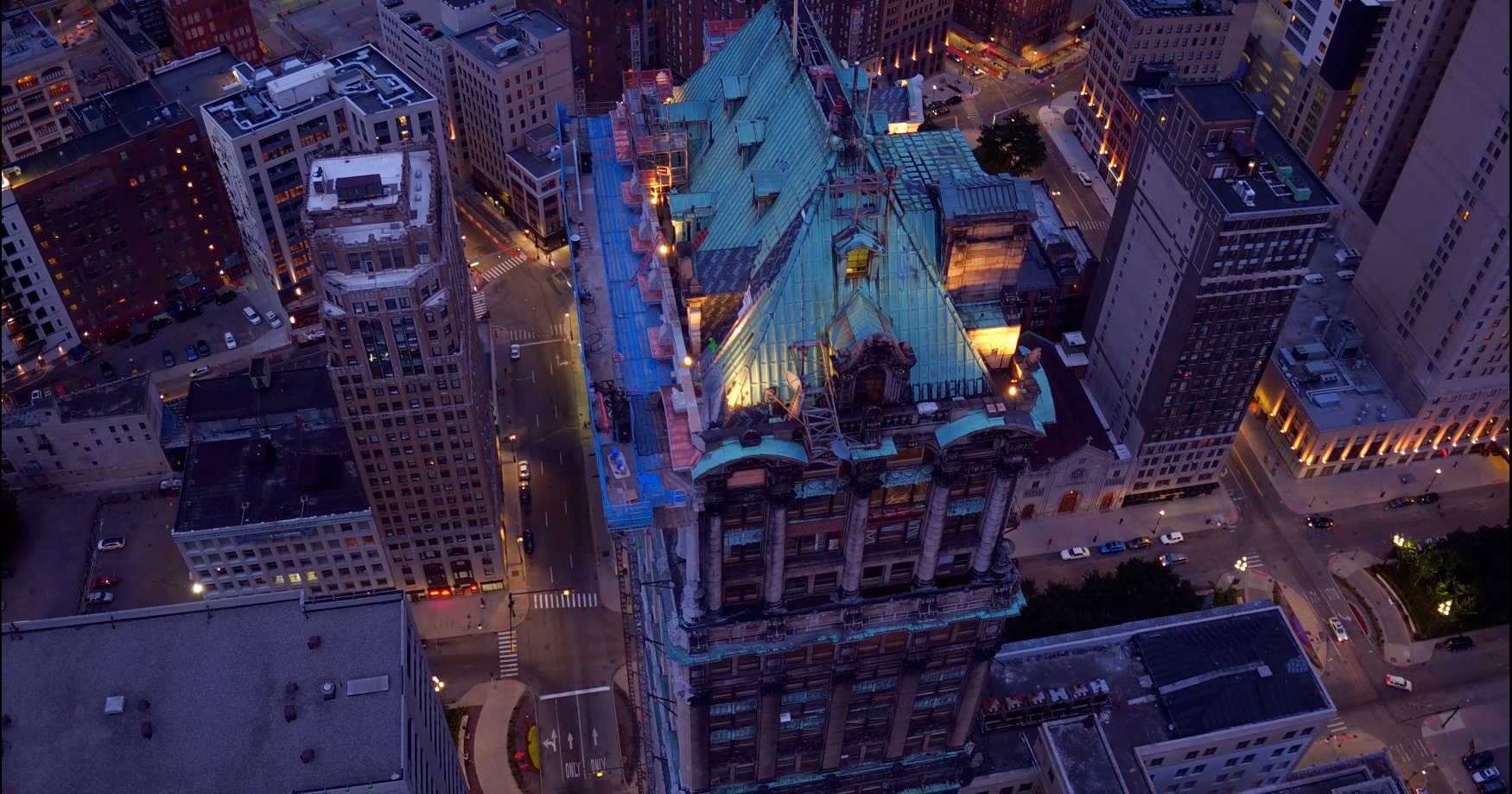
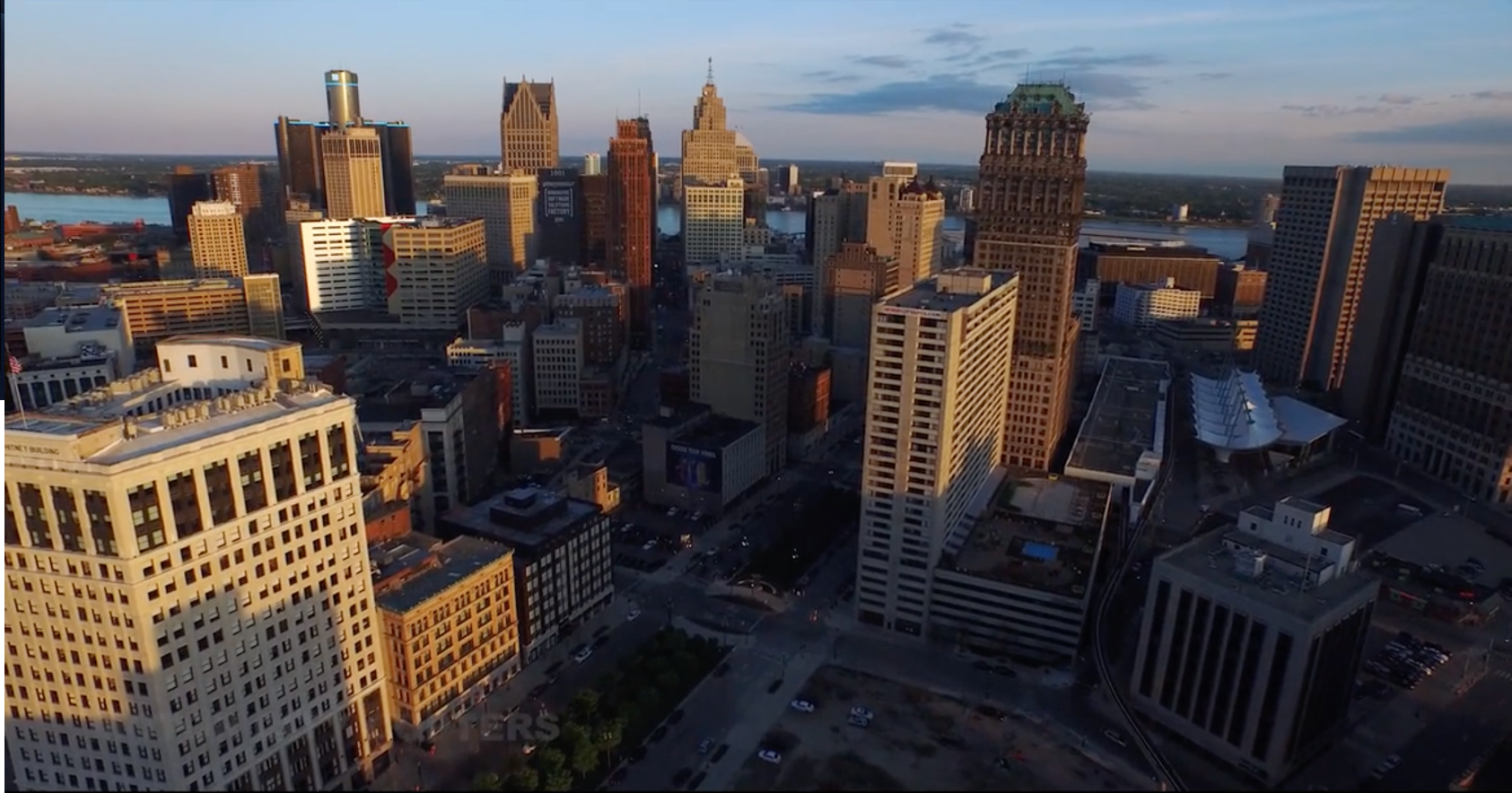
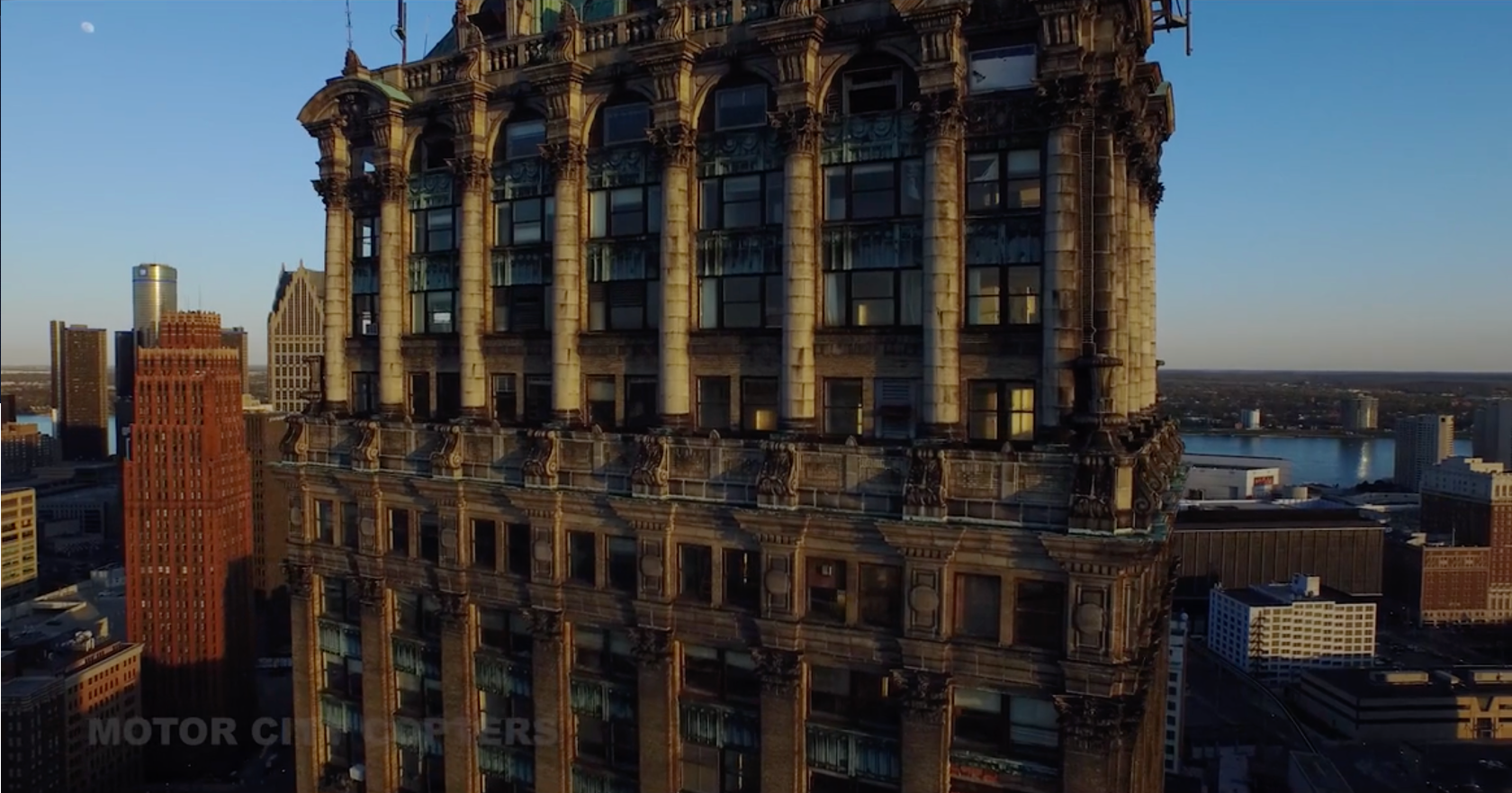
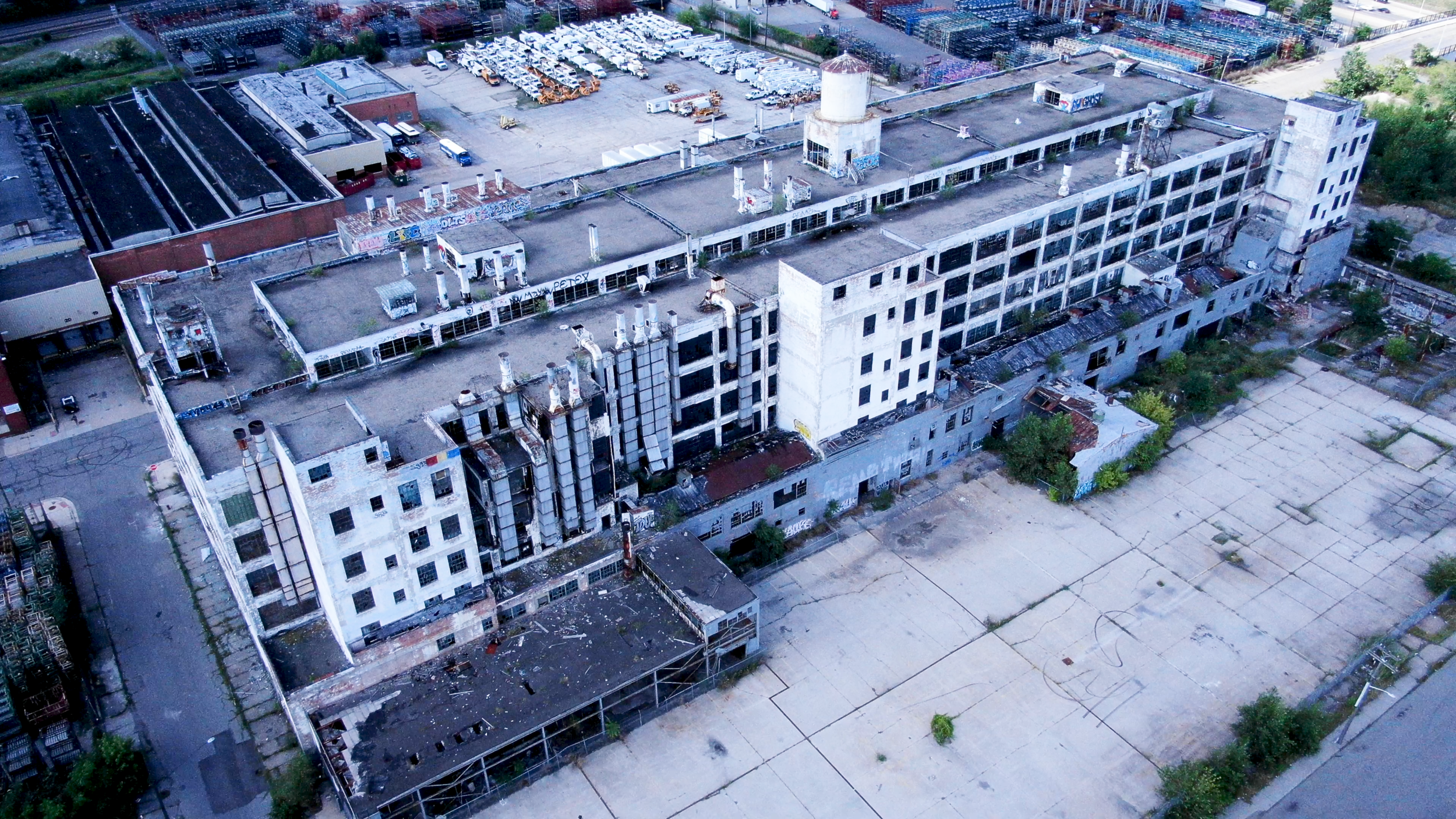
The Lee Plaza Hotel next to historic East Grand Boulevard stands tall and straight but appears somewhat lonely. Perhaps its architecture is out of place – the tallest building within two miles, its thin singular tower pierces the sky like a spear. The hotel reaches over fifteen floors high and is crowned with a two-story pointed roof. Its foundation is shaped like the letter “I”. The imposing structure dominates the surrounding New Center neighborhood. The Michigan National Guard and two schools, Northern High along with Hutchins & McMichale Technological Academy sit directly in the shadow of the Lee Plaza. The hotel’s beautiful orange-glazed bricks practically glow in the summer sunlight, reminding of its past glory. Unfortunately today, only a shell of this former luxury hotel remains. Pillaged to the point of near-total destruction, the Plaza Hotel is a discarded carcass of a once great residential hotel that rivaled all others in the city in elegance and prestige.



|
| |
|
| |
Motown royalty and movie stars often resided at the Plaza Hotel for long periods of time. During the early part of the century it was fashionable to live in hotels for weeks or months at a time. Some people often lived in the same room for many years as guests. The business of hotels was also much different. During the pre-industrial era hotels were often one of few places that had running hot water for showers. Most also had indoor plumbing, laundry services, and restaurants with entertainment. For those with money, hotels offered a much better option than owning or renting. Rather than being responsible for the life’s daily chores, these well-to-do people would enlist the help of the hotel’s four-star staff. If you got bored with your view or surroundings you simply just picked up and went to another one of the city’s many fine hotels.

|
| |
|
Places like the Lee Plaza were all over Detroit in the 1920s and 30s. However, if you were an African-American around the turn of the century (and for many years after) looking for a room at one of these hotels, the answer was often “Sorry, we’re full”. Despite the advancements of blacks in the north, simple things like finding room and board were difficult at best. Most blacks were forced to room in the “Black Bottom” neighborhood, north of downtown, a place known for its squalor. This area of Detroit was very dense with African-American families. Banks offered little to no credit to blacks in those days and people took what they could get. Often the only choice was to own or rent in Black Bottom. Most of it was forcibly bulldozed in the 1950s to make way for I-75 under the guise of “urban renewal”. For those blacks that could afford to stay outside of Black Bottom, the Lee Plaza was their first choice. Though not exclusively catering to backs, the hotel did not discriminate against them. The Plaza was well patronized by blacks, whites, celebrities and those for whom race was not an issue.
|
|
| |
|
|
Built in 1929 by the by the renowned architect Charles Noble, the Lee Plaza Hotel would eventually become his crowing achievement, an art-deco masterpiece. Famous for building other similarly styled, but smaller buildings like the Kean Building on Jefferson Avenue, Noble also designed residential homes such as the William Wells home on the river east of downtown. The Lee Plaza, as well as many of his other buildings, would become national landmarks protected under the National Registry of Historic Places.
At its creation, the Lee Plaza was a very modern and lavish hotel offering all the amenities of the day. Looking at the doors of the Lee Plaza’s rooms you can see that they offered pick up laundry service. Each room had a door with a large rectangular hole in it and another set of doors outside. This way you could simply put your laundry between the doors and a workers would come by and collect the clothes from the outside without having to ever enter a guest’s room. It would be returned later in the day the same way – highly convenient for both the staff and the hotel’s guest
|
|
 |
| |
|
|
 |
|
Since it was just blocks away from the Motown recording studio, the hotel was no doubt visited by Motown stars and musicians looking for upscale accommodations or a nice place to drink. The Lee was known for its excellent variety of entertainment. Even after the heyday of Motown the Lee Plaza experienced a short revival in the 80s when it was partially remodeled and turned into an upscale senior citizen community. Today nothing but the remnants of this grand piano are left. The names and appearances of famous singers and musicians who played here were not well documented but one can only imagine some of those who may have sat at this very piano and played for the hotel’s guests.
The Lee Plaza is a prime example of how a historic building is lost due both to theft and indifference. Its many large windows have all been removed. Scrappers steal them, leaving gaping holes in the building’s façade. The steel frames are then sold for less than $100. This incredible damage seems tame compared to other incidents of vandalism that have occurred at the Lee Plaza over the years. In the 90s, decorative lion head sculptures were removed from the building’s outer façade. Some fifty-six irreplaceable lion heads were chiseled off and disappeared. |
| |
|
|
However, in 2001 some of the lion heads turned up at the new Edgewater Loft development in Chicago. Apparently the sculptures were sold at an auction in Michigan some years after being stolen from the Lee Plaza. The buyer then sold them to a Chicago developer who was rehabbing a historic building. The developer unknowingly incorporated some of the fugitive artwork in his restoration, setting off a firestorm of controversy between Detroit preservationists and architects in Chicago. In an ironic twist, the reason the sculptures were even discovered was because the developer had won an award for historical preservation of this building, which included six of the stolen lion heads. In an article to promote the new development, the architecture firm in charge of renovation put out a newsletter entitled “Detroit Lions Invade Chicago”. Unfortunately, the person or persons responsible for the brash vandalism and theft were never caught. The remaining fifty lion head sculptures were never seen again, and likely they adorn some other building or buildings across the country and are yet to be found.

|
|


|
| |
|
|
 |
|
The Lee Plaza is a story of robbery and plunder worthy of a great 16th century pirate tale. The massive remains of the hotel often resemble a shipwreck, but unfortunately there are no more treasures left to discover. Water damage, caused by the absence of a roof, has weathered the building beyond recognition in many places. In 2005, the vaulted copper roof of the hotel was stolen. Relentless scrap thieves, using torches and trucks, tore massive pieces of hundred year-old copper from the building’s roof. The two-story vaulted roof is hollow inside, allowing access to the building’s elevator motors. Using torches to loosen the copper, they would push the sections away from the building from the inside. Other scrappers would then finish pulling the copper off from outside while dangling over the roof’s very steep edge. It was a deadly ballet of fire, hammers, and brute force.


|
| |
|
I watched this madness while standing next to two Detroit cops. I asked them why they couldn’t arrest the group of men, which numbered around eight or nine on the ground alone. One cop simply said, nonchalantly, “Its Sunday, and we ain’t got no backup. It’s just him and me on patrol, we’re fucking outnumbered, kid!” That’s when I realized that the scrappers were less afraid of the cops than the cops were of actually doing their jobs. Living here you have to accept this is just how Detroit is sometimes. You may not like it, or agree with it, but in the end it is what it is…imperfect. I watched the scrappers tear section after section from the roof. Large copper squares slowly wafted to the ground, ending in a cascade of loud crashing metal sounds. Smoke and flames occasionally could be seen coming from the hotel’s insides. I stood next to the cops as they directed traffic away from the streets in front and next to the hotel. I suppose it was literally the least they could do.

|
|
| |
|
| |
The next day’s light revealed the extent of the damage left in the wake of this brazen theft. The roof’s wooden substructure was now charred black and had countless holes, allowing the elements to penetrate the building. Since then the Lee Plaza’s deterioration has been sped up exponentially. The building is becoming increasingly dangerous. The last time I walked through I saw numerous pieces of concrete and brick hanging precariously loose, ready to fall on someone. Unfortunately, this building can never, and will never be saved. Despite its addition to the National Registry of Historic Places in 1981 it is now too far gone. Once its roof was stolen, the hopes of renovating this historic building went out of the figurative window. For now the Lee Plaza will continue to be around, deteriorating before our very eyes, its architecture pillaged and defaced, and its history virtually lost forever; a sad commentary for a city that has already lost so much.
|
| |
|
|
 |
|
 |
| |
|
|
|
| |
|
|
 |
| |
|
|
 |